


One of the known security risks for the AI labs is that they are chock full of high-risk insider threats. If we were to consider increasingly powerful AI to be a sensitive military technology, then the personnel vetting and controls used by the typical tech company are nowhere near the standard applied in a national security context.
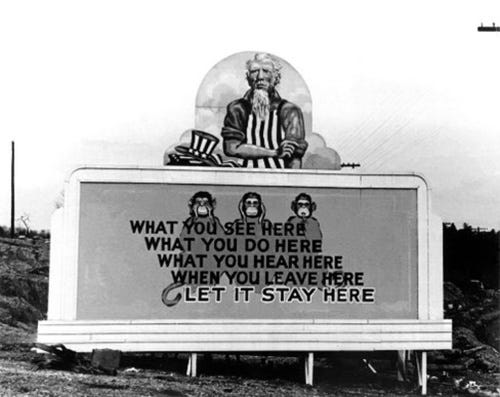
It is an unfortunate fact that certain countries commonly use coercion via familial ties to gain cooperation. Plus there are all the other kinds of insider threats and external threat actors trying to gain access.
This is very much “AI as a normal technology security challenge”1 and we just aren’t applying known best practices used in nearly identical circumstances.2

However, simply firing all of the unhappy risky people is not on the menu.
I think technological progress offers a solution. Well, a mitigation.
What if we could have a 24/7/365 AI monitor for all lab employees such that they could not easily become an insider threat without being detected? The AI would be on guard for violations, which it could flag in near real time, and would filter out benign data. Everything would be controlled by the companies’ internal security departments.
That’s more privacy than the typical tech consumer gets. And they even have to pay for the darn product.
And what if the monitor could be your friend?
It seems fitting to use an AI industry surveillance product to secure the AI industry.3
Now, sure, I’m biased. “Just use surveillance” is an idea coming from the surveillance enthusiast guy. I get it. Hammer + nails and all that. Too convenient.
But, as far as I can tell, this idea has three really strong points in its favor:
Do not get me started on the SL5 issue. Would be great if we could apply the known best practices there.
While I was drafting this essay, my ChatGPT Dot helpfully notified me it had found resources to address placeholders I had left to deal with later.
Also, probably there’s some utility here for any eventual verification regime for AI treaty/standards enforcement.
My Dot informs me I’m not quite the first person to have this basic idea. Which is good, because it strikes me as obvious. (But then why haven’t we tried doing it?) Nick Bostrom had the same idea for, uh, society at large in The Vulnerable World Hypothesis (published September 6, 2019; pp. 465–466). Let’s try a limited pilot first, I think. This 2023 LessWrong post has similar ideas, without suggesting the particular AI monitoring wearable approach.